Jon Batiste Is Everywhere
The most interesting (and arguably prolific) man in music joins the Pops at Symphony Hall this week for three nights only.
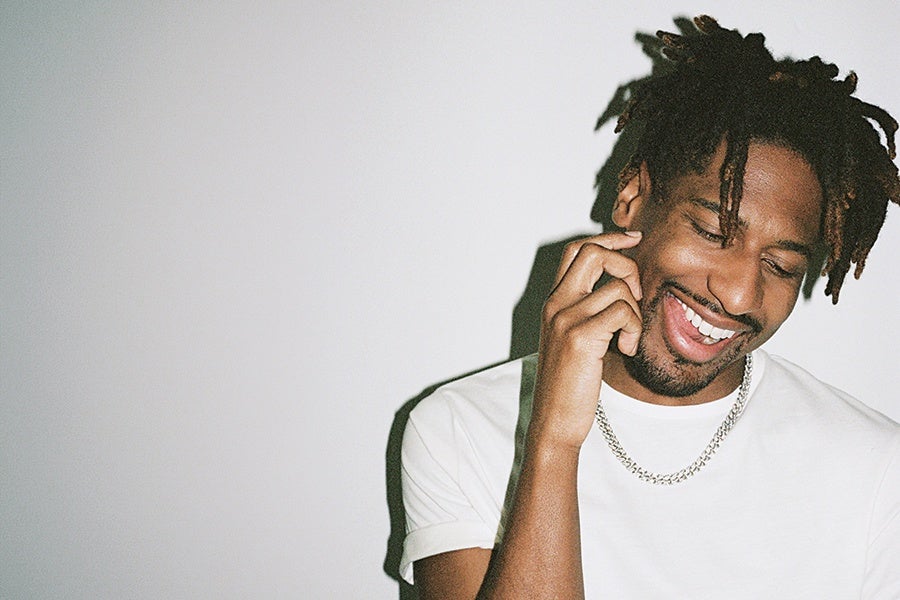
Photo by Jonny Marlowe
There is no tidy way to describe what Jon Batiste does. He’s an eight-time Grammy winner and a classically trained pianist who grew up in a New Orleans musical dynasty. He spent seven seasons leading The Late Show with Stephen Colbert band on CBS, danced with Mick Jagger at the Vanity Fair Oscar Party, and has argued—convincingly—that Beethoven created definitively African music. Now he’s bringing his talents to the Boston Pops from May 12 to 14, for what promises to be the kind of evening that reminds you why live music exists in the first place. We caught him at home on his farm, in a reflective mood, and talked about genius, grief, and what it feels like to play with a full orchestra.
What’s your favorite part about performing with an orchestra?
The sound. You know, the orchestra can be very loud, but what I love about it is that, in order for an orchestra to work and for the sound to really come across, there has to be a real discipline in terms of volume. The trumpets can’t blast because the strings will be covered, and the brass has to be in balance with the strings, and the percussion section plays very melodically, which is also something that I really appreciate. So it creates a lot of nuance in the sound.
You’ve covered pretty much every musical genre there is—which do you most identify with?
I don’t really think about genres more than I think about what I call my music: in lieu of a genre title, it’s social music. But if I had to pick a genre, it’d probably be jazz, because jazz is both a genre and a culture. It’s a tradition, and within that tradition, there’s the blues, there’s folk music, there’s gospel, and it’s really very rooted in New Orleans, where it was invented, where I’m from, so I guess that would probably be the most all-encompassing genre and the one that I most relate to.
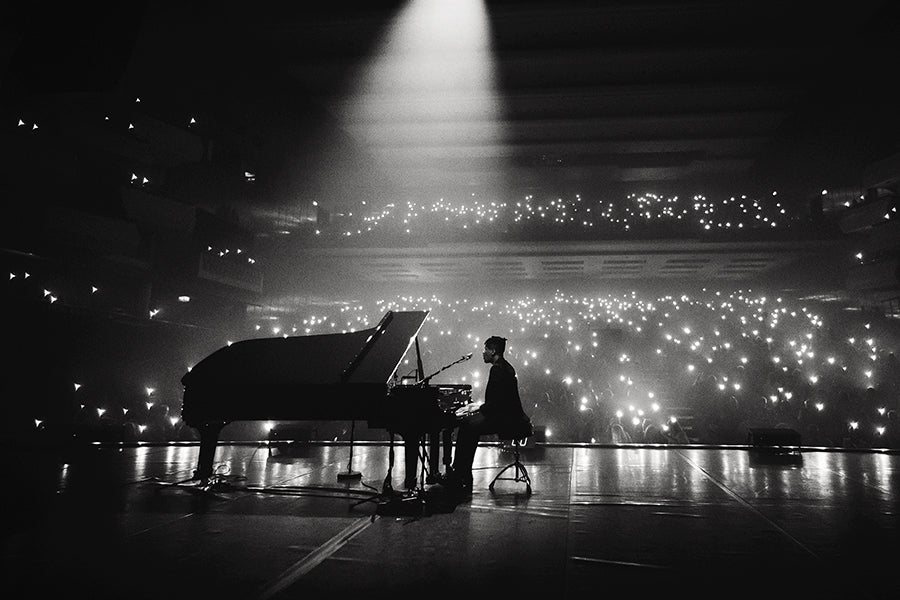
Photo by Luca Rossetti
What is your favorite part about touring?
Seeing the audience respond in a way where they’ve been transformed by the music and the experience of being together—that feeling, that look in someone’s eye. They don’t have to tell you; you can see it on their face, and the energy that it puts into a room is really revitalizing. It’s one of the oldest traditions in humankind. It’s been around for a reason.
And your least favorite?
Travel is tough. You know, if you imagine you just played a show, and you’re on stage for nearly three hours, and you sweat through all your wardrobe changes, and you gave it all you got, and now you have to get up at 5 a.m. to get on a tour bus or to get on a plane to another city to make it to a 9 a.m. appointment, and you have a full slate that day, and then multiply that times 10.
Is there a performance venue that you absolutely love?
You know, it’s tough to say. It’s the audience that makes the performance. But I do love the feeling at the Greek Theatre in L.A. I love the feeling of the Maple Leaf Bar in New Orleans. I love the feeling of the St. Augustine Amphitheatre in Florida. I really love the big, iconic venues on the East Coast that I’ve played— especially ones where sporting events happen. Like, I love playing at Madison Square Garden and MetLife Stadium. They have an energy just built in. But it’s the audience, ultimately, that makes the thing.
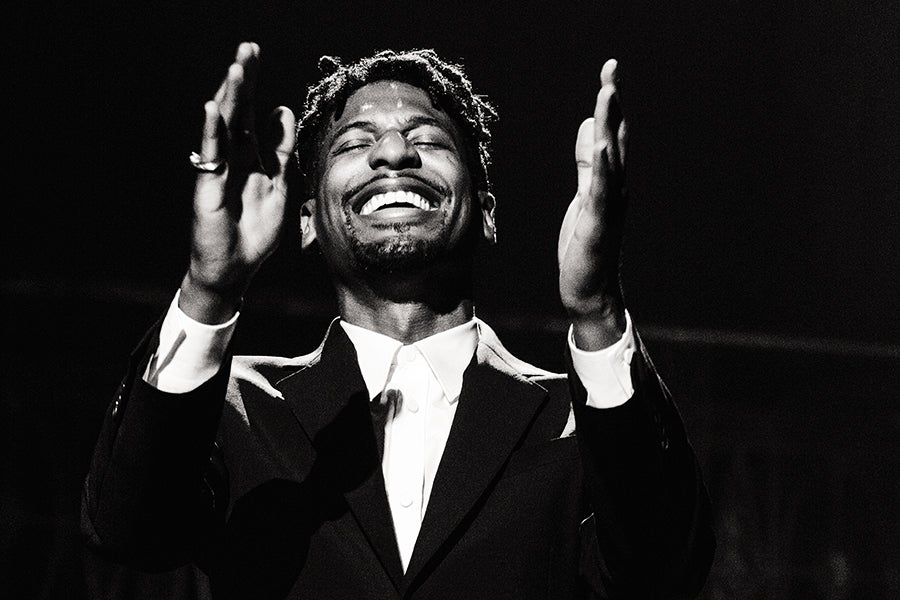
Photo by Luca Rossetti
You’ve described Beethoven as very African. How so?
His rhythm. Beethoven’s rhythms are one of the keys to understanding his innovation. We all know and love the melodies, but the rhythm is what drives it to that place of pathos, and it also is what makes it endlessly influential in the classical canon. And there’s this great lore around Beethoven being a person of color. Many claim he was Black or of African descent. And then there’s other lore about him, which is more of a musicological study, actually not even lore, that he would use the influences from these African musical traditions as inspiration, which many of the classical musicians did. Many of them were improvisers as well. There’s a lot of the classical canon that started as improvisation. It’s not thought of in that way, but this is what I do—I study this stuff. I spent my whole life studying this.
Where does improvisation come from? And is that a total high as a performer?
It comes from the divine stream of consciousness. It’s the subconscious. It’s the place where all ideas come from, all creativity comes from. It’s a super consciousness. It is beyond thought. It is where intuition comes from. Improv kind of speaks to the invisible realm.
Do you think music can fix the world?
I think music is a gift given to us that can put a mirror up to who we actually are.
Were you a big Nine Inch Nails fan before working with Trent Reznor on Soul?
I listened to them in high school in passing. Growing up in the MTV era, they were a big presence. I didn’t have a strong inclination that we would ever work together, which is why it made it so cool. It was kind of like some thing that you never would have thought in a million years would happen, right? That’s how I also felt about The Late Show, or many things in my life and career—it’s like you never would have thought that you’d arrive where you did.
People always use other artists to describe someone’s work. Is there a comparison you’re okay with?
Yeah. I mean, the most I’ve heard was maybe Thelonious Monk. I’ve been compared to Duke Ellington, who was a band leader. And both of those happen to be two of my biggest influences. I’ve never called myself this, but people who come to shows and see me play all these instruments and the way I lead the band have compared me to Prince. I had the chance to play with Prince when I was coming up in New York, in my early days after I moved from New Orleans, and he definitely was an influence. So I think that’s really cool. But one of my biggest influences is the trumpeter Roy Hargrove. He passed away recently.
Who is the most musically talented person you’ve ever known?
I grew up around a lot of musically talented people. My sister, who doesn’t play anymore, and now her son, who’s 10 years old—my nephew, Brennan. My sister and I started together, but she was better than I was.
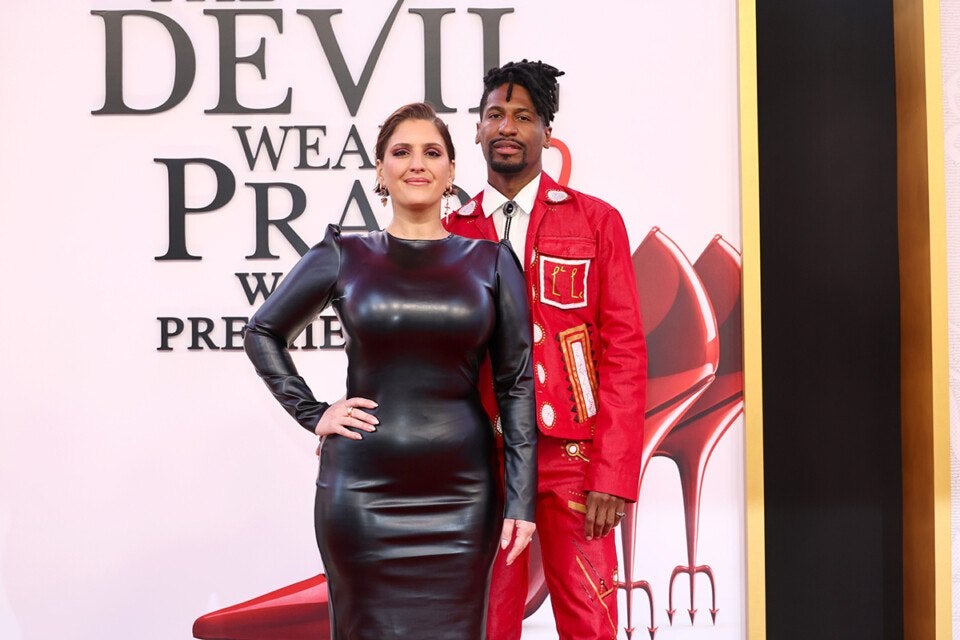
Suleika Jaouad and Jon Batiste attend the world premiere of The Devil Wears Prada 2 at Lincoln Center in New York in April. / Photo by Jamie McCarthy/Getty Images for 20th Century Studios
Who is your favorite musician to collaborate with?
My dad.
Okay, tell me a secret about Stephen Colbert.
I don’t know if it’s a secret, but he can really sing.
Where do you keep all of your awards?
Wherever my wife, Suleika, puts them.
Speaking of which—did you two really meet at band camp?
Yeah, we met at band camp in Saratoga Springs in 2002.
And you’ve collaborated with her professionally?
I have. We just did a tour last year on stage together for her book, The Book of Alchemy: A Creative Practice for an Inspired Life. And she plays the bass, as well as obviously being a great writer. She is also an incredible visual artist, and she paints. For my album We Are, she actually took the photograph and designed the cover art. So I mean, she’s got many talents, and we put all our talents on stage around the release of this book, and it was an amazing success, and we plan to do more of it.
How did you end up dancing with Mick Jagger at the Vanity Fair Oscar Party?
I’d actually met him before that, but that was our first time really hanging for, you know, more than just seeing each other in passing. The first time I met him was when I played with the Stones at MetLife two years ago. We’ve been around each other, but we spent hours talking about records and history and life and all that. And then, you know, everybody saw that clip of us dancing.
Have you ever been starstruck?
Yes, but it’s mainly these older jazz musicians. Like, I remember the first time that I was around Sonny Rollins. It’s more like I get “these guys really can play” struck. And yeah, I’ve been around people who I’ve grown up watching on TV and feeling like, Oh my goodness. Like I remember the first time I met Will Smith when I was over at The Late Show. I grew up watching The Fresh Prince of Bel-Air. Or like, you know, when you have the opportunity to meet your heroes, like I got a chance to meet Carol Burnett. I was one of those kids, when I was 12 and 13 years old, that was watching television programs from the ’40s, ’50s, and ’60s. My favorite television shows were I Love Lucy, Taxi, and The Carol Burnett Show. Carol Burnett wrote me a letter telling me that my dressing room in the Ed Sullivan Theater was her dressing room.
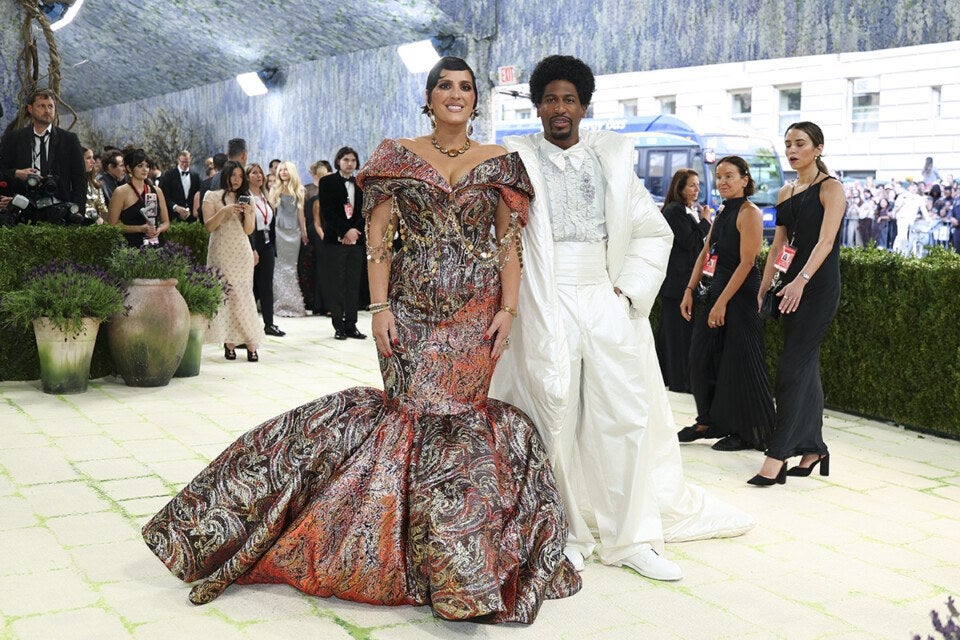
US writer Suleika Jaouad and husband US singer Jon Batiste arrive for the 2026 Met Gala celebrating “Costume Art” at the Metropolitan Museum of Art, in New York, on May 4, 2026. (Photo by Angela Weiss / AFP via Getty Images)
What was the last thing that made you cry?
I’m home right now. We have a beautiful farm here, and I guess it was moving to me, the fact that Suleika and I built this life together. And, you know, we didn’t know if she would make it beyond her last [cancer] treatment, the last time we were going through it. It was one of those precarious situations. And then you look around, and you see we had a bunch of friends and family; my mom was here, and her mother was here. And it wasn’t like I was sobbing. I remember feeling like the older I get, the tears just come every now and then, just looking around at life. But I don’t know the last time that I, like, heavy cried, but that was definitely one of the times when I felt like crying.
If you could play for one person, living or dead, who would it be?
Our Lord and Savior, Jesus Christ.
And if you weren’t doing any of this—what path does your life take?
I’d probably be a monk or competitive video-game player in Kenner, Louisiana.
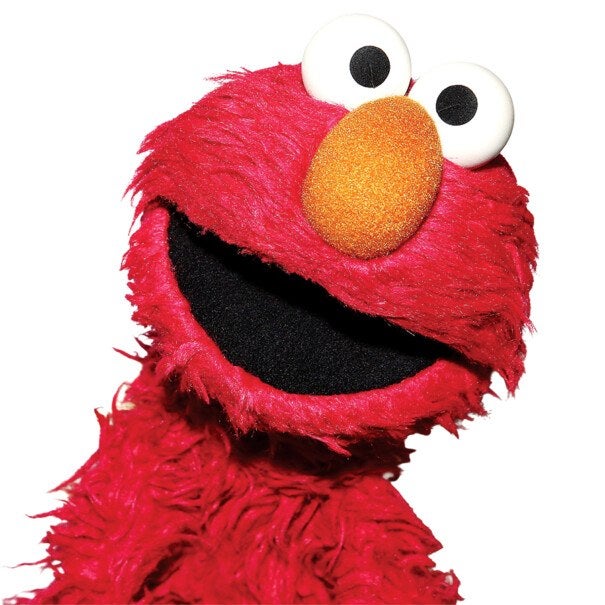
Photo by Paul Zimmerman/WireImage via Getty Images
By the Numbers
Special Guests
The Pops are amazing, but who wouldn’t love the help of a VIP like Batiste—or Elmo?
1,600+
Number of guest artists and ensembles who have appeared with Keith Lockhart and the Boston Pops between 1995 and 2025.
40+
Number of unique instruments used by soloist guest performers—including the gamelan, Uilleann pipes, zither, and typewriter.
8
Age of singer Oladunni Oladipo when she sang with the Pops in 2007, one of the youngest performers ever to appear with the orchestra.
7
Number of astronauts, including Buzz Aldrin, who have appeared with Lockhart and the Pops.
6
Number of former or current Massachusetts governors who have appeared as narrators onstage.
4
Number of Muppets—Elmo, Big Bird, Oscar, and Rosita—who were onstage for the Sesame Street “Evening at Pops” in 2000.
This article was first published in the print edition of the May 2026 issue, with the headline,“Just Jon Batiste.”