Five Revolutionary Relics on View in Boston This Summer
Very old and important things!
This is part of a series from our June issue on Boston’s Big Summer of 2026.
In 1775, ordinary people picked up whatever was at hand—a pistol, a powder horn, a sword—and made history. Some of what they left behind has survived 250 years, and a few of those relics are on view this summer at the Old State House (206 Washington St, Boston) as part of The Road to Revolution: Massachusetts and the Independence Movement. See them IRL before they’re returned to the archives.
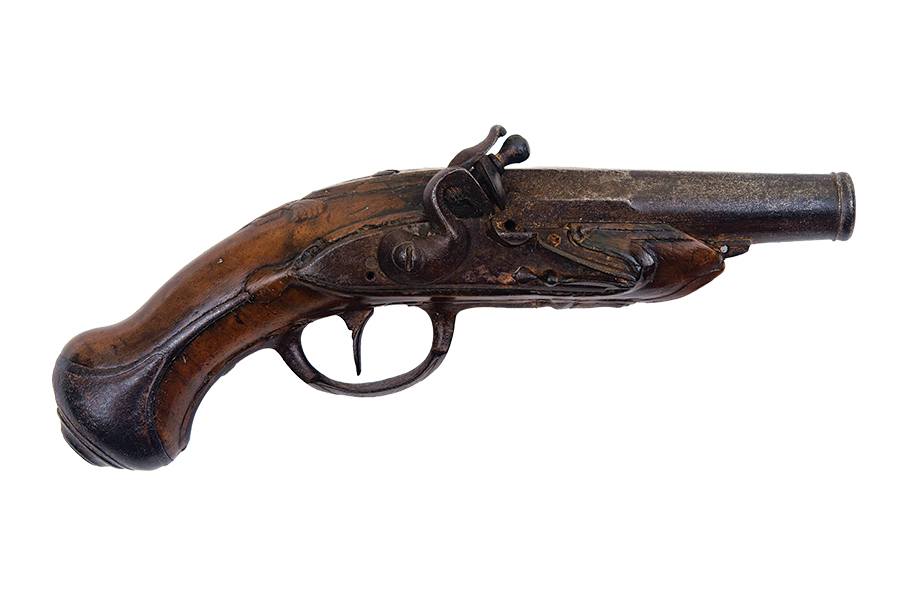
1. A Very Old Pistol
This wood-and-brass flintlock pistol has a fishtail handle and fits in a waistcoat pocket—which would have been a good hiding place on the night of April 18, 1775, when Paul Revere rode from Boston to Lexington to warn Colonial militia that the British were coming.
Collection of the Massachusetts Historical Society
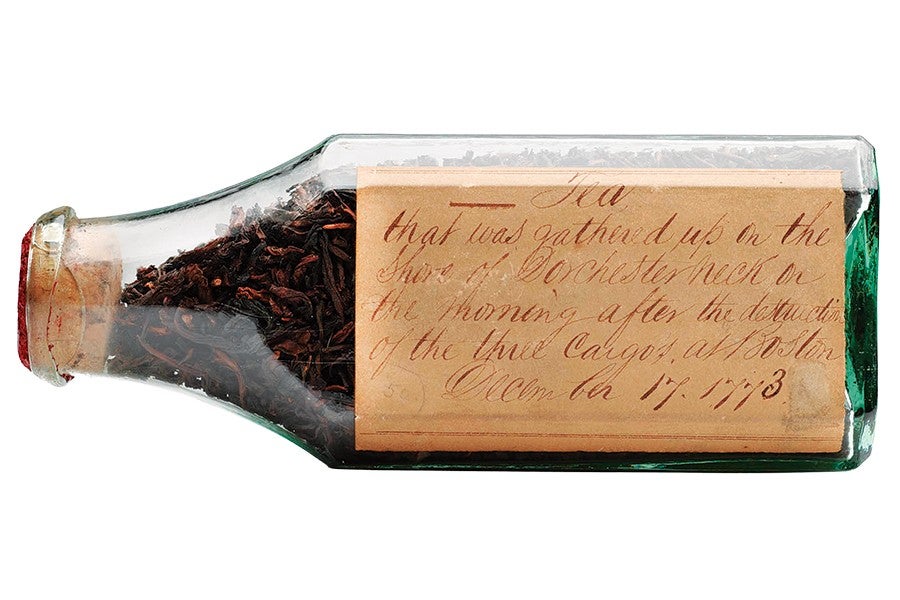
2. Actual Tea Leaves from the Boston Tea Party
The morning after the Boston Tea Party, the harbor was still infusing with black tea. These tea leaves washed ashore at Dorchester Neck, were scooped up by a local, and bottled with a handwritten note describing “the destruction of the three cargos at Boston.” Hard to believe they’re older than the country itself. You can see them at the Massachusetts Historical Society (1154 Boylston St., Boston).
Collection of the Massachusetts Historical Society
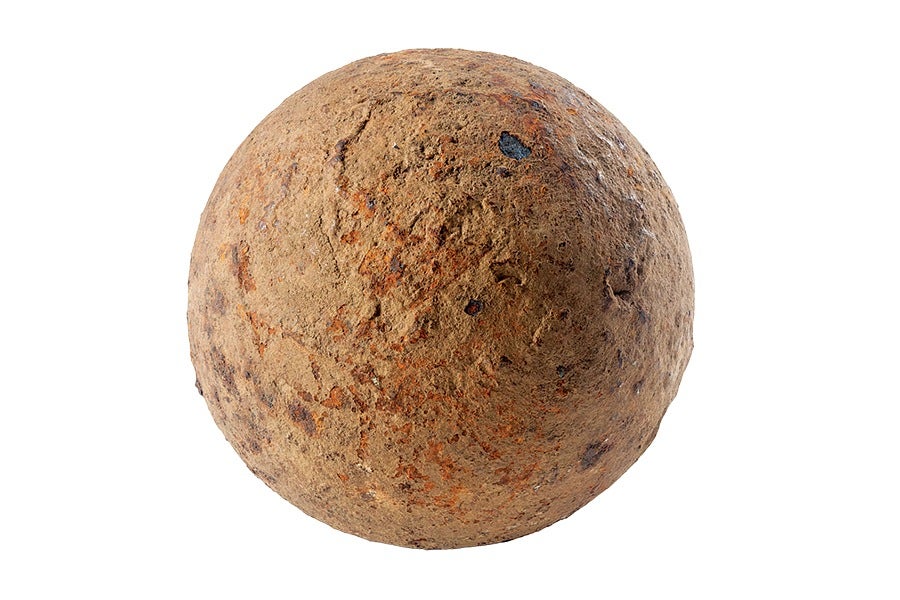
3. A Legit Wrecking Ball
Cannons were not fired during the skirmish at Lexington Green in April 1775—at least, that’s what the history books say. But someone found this small iron cannonball on the side of the road near Lexington after the famed battle there.
Collection of the Massachusetts Historical Society
4. Powder Keg
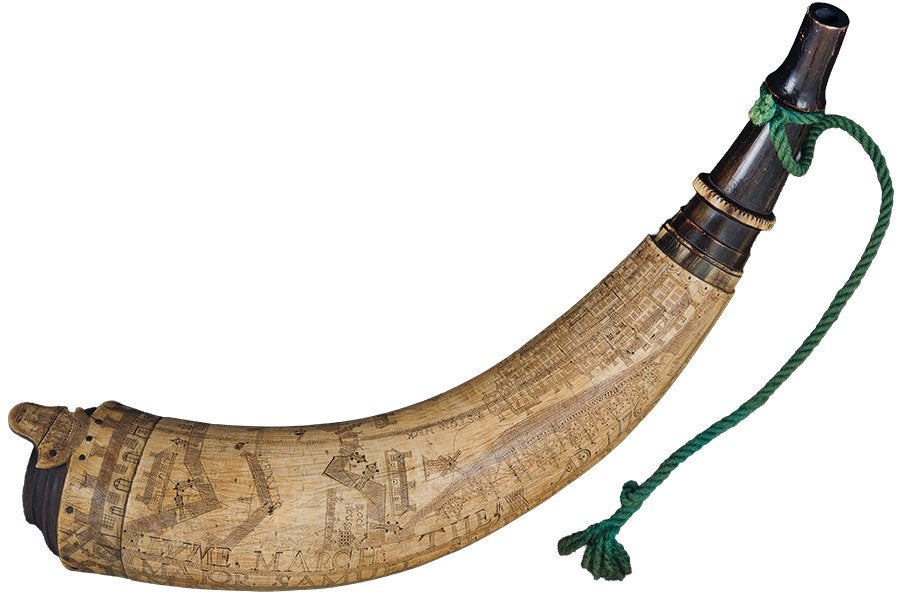
Major Samuel Selden carved a map into this gunpowder horn using nothing but a knife, etching Continental Army fortifications during the Siege of Boston and the phrase, “Made for the defence of liberty.” It’s part weapon accessory and part protest art.
Collection of the Massachusetts Historical Society
5. A Very Old Sword
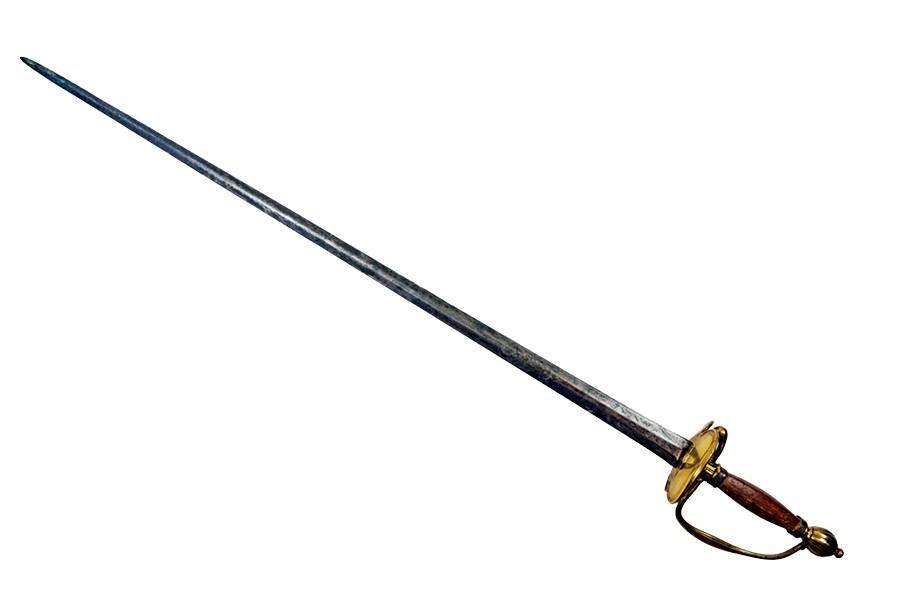
When General Joseph Warren, president of the Massachusetts Provincial Congress, sent Paul Revere and William Dawes on their midnight ride, this brass, silver, and wood sword may have hung at his hip. Warren would be dead within two months, killed at Bunker Hill. The sword survived.
This article was first published in the print edition of the June 2026 issue, with the headline,“What Survived.”