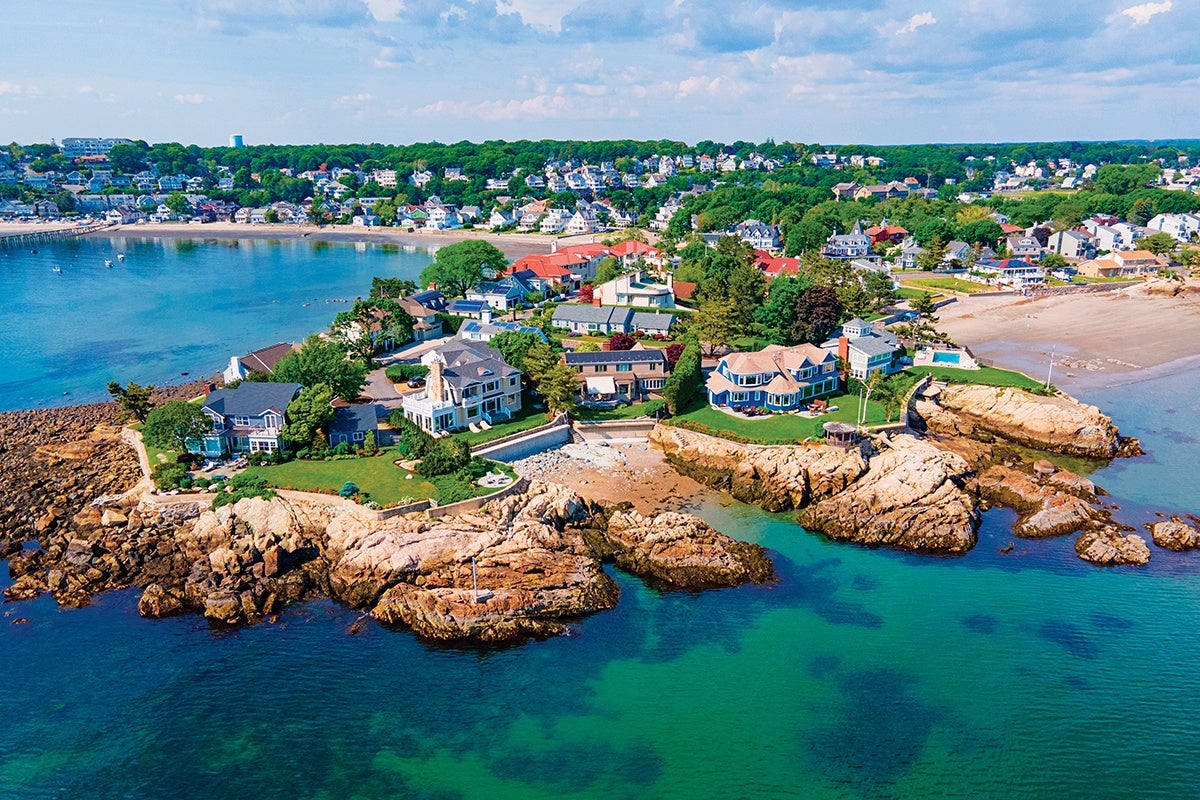
Saving a Grand Old Lady on Hyannis Port
Architect Jill Neubauer and Clodagh Design gave a crumbling 120-year-old Cape Cod cottage a second life—on a new foundation, with all its soul intact.
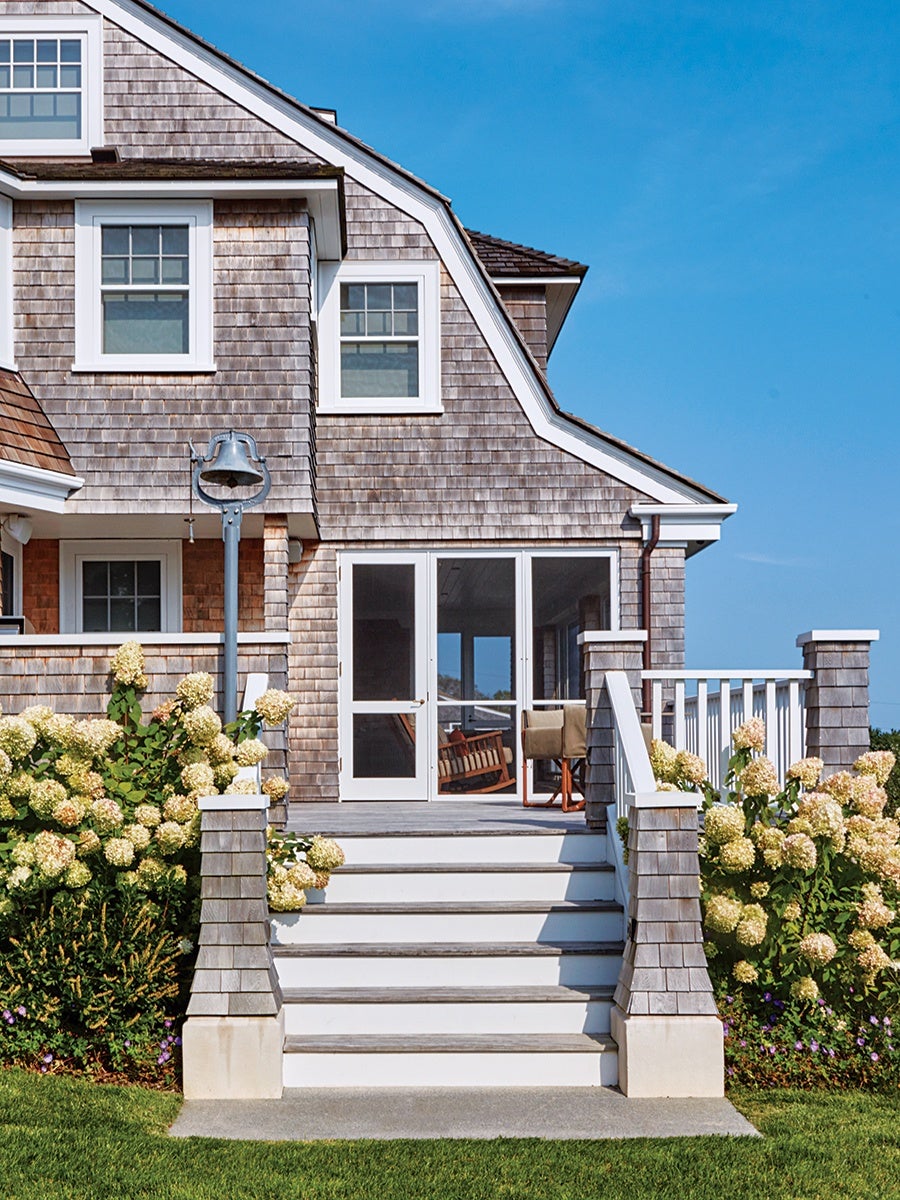
Photo by Charles Mayer
This article is from the summer 2026 issue of Boston Home. Sign up here to receive a subscription.
When architect Jill Neubauer first toured this 120-year-old, weather-beaten home on the shores of Hyannis Port, she noticed what turned out to be a sign that its rehabilitation was more complicated than the new owners realized. The wallpaper in the stairwell was puckered and pulled. “There were multiple cracks in the foundation and slab,” Neubauer says. “The east side of the house was pulling away from the west side, slipping down the hill toward the marsh.”
The owners, one of whom has a childhood history here, committed to saving it. The team lifted the house, moved it 5 feet to the east, and set it atop a new foundation, keeping the shell intact. Then, Neubauer and Clodagh Design reimagined the interior without losing sight of the past. “Everyone rallied around this great old lady desperate for love,” Neubauer says.
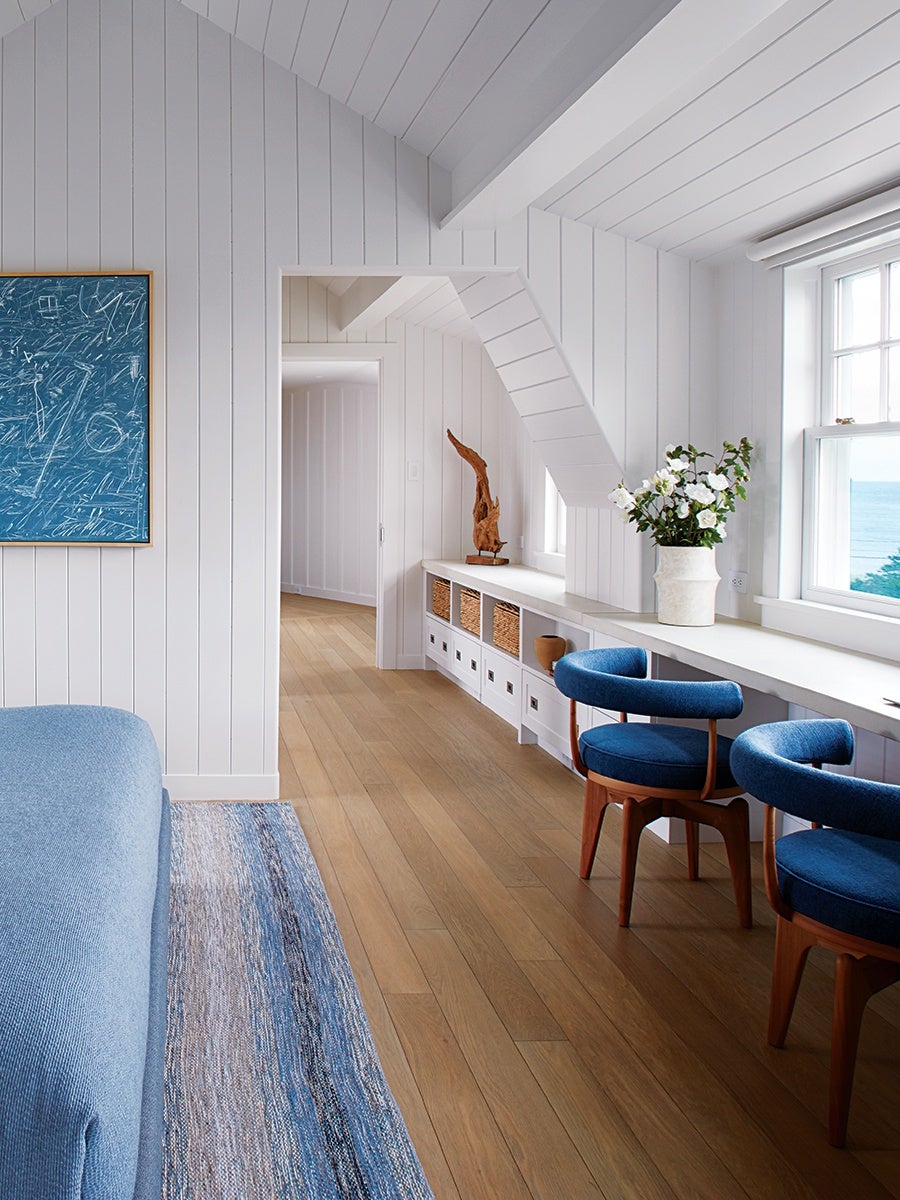
Photo by Charles Mayer
Honor Yankee Essence
It was important to Neubauer that they not zhuzh things up too much. Instead, she sought to capture the essence of what was, ushering the house into its next chapter gently and quietly. Inspired by the materiality, texture, and charm of the beadboard lining the west wing bedrooms, Neubauer and Nancie Min, who is the design director at Clodagh Design, specified painted wood paneling throughout the home. V-groove swathes the west wing guest suite, beadboard nestles between excavated ceiling beams in the living room, and stately board and batten greets visitors in the foyer, running up the stairs to the generous landing. “We brought the idea of the original wood forward, elevating it in scale and crispness,” Neubauer says.
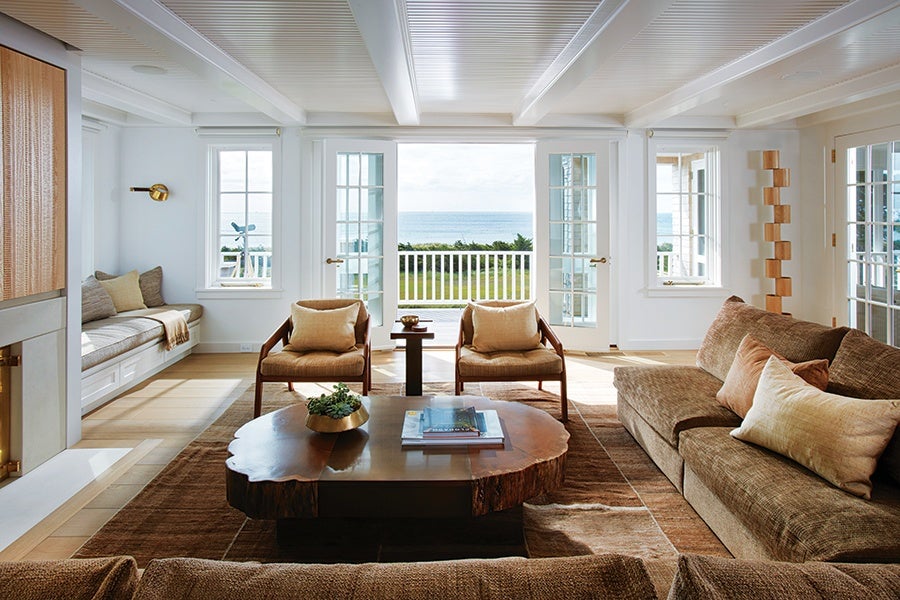
Photo by Charles Mayer
Lend a Hand
Artisanal craftsmanship and natural materials lend honesty, character, and comfort, particularly in the living room, where Clodagh Design represented all the elements: water, metal, earth, wood, and fire. To fashion the coffee table, André Joyau inserted a bronze slab between the organic ends of a tree, illustrating the intersection of nature and craft. A wood panel with abstract carvings by Benoît Averly hides the television over the fireplace, a functional and decorative display that reveals itself as one nears. The rug, composed of various antique rugs stitched together by hand, adds an element of craft underfoot. As with the table and panel, you feel the maker’s presence. “It’s made by tender loving hands,” Min reiterates. “There’s comfort from that love.”
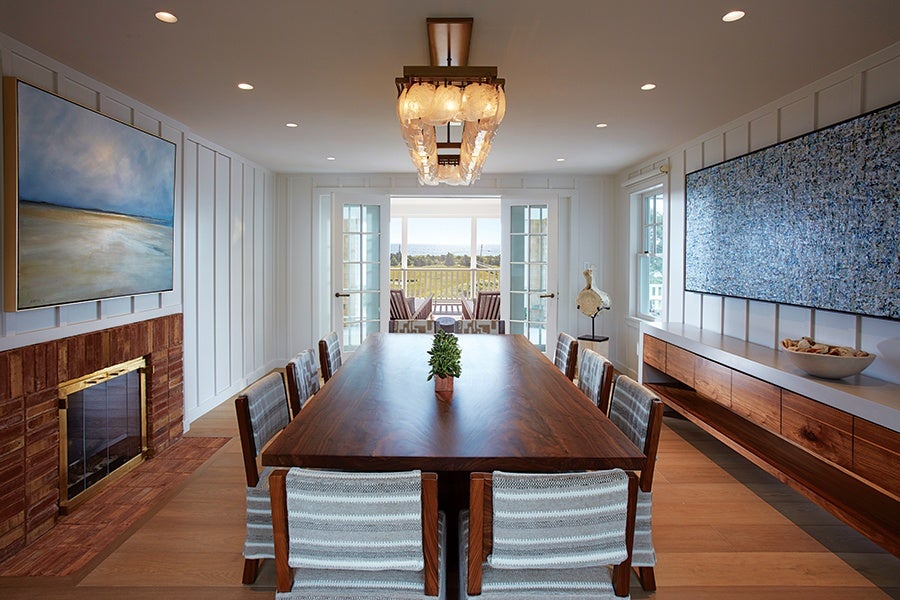
Photo by Charles Mayer
Cultivate Context
Artwork, lighting, and color help establish a sense of place, strengthening the home’s connection to the surrounding landscape. For instance, the abstract forms on the diptych by Marc Lambrechts in the entry are reminiscent of seagulls, and seascapes painted by Provincetown native Anne Packard realistically echo the water views. In the dining room, the Pagani Studio chandelier’s rock crystal slices are shaped like sails, alluding to the husband’s favorite pastime here. In devising the home’s overall color palette, Clodagh Design considered the actual beach. “We reference a jar of local sand during the design process for every beach project,” Min says. “Cape Cod sand has the coolest tones we’ve seen.”
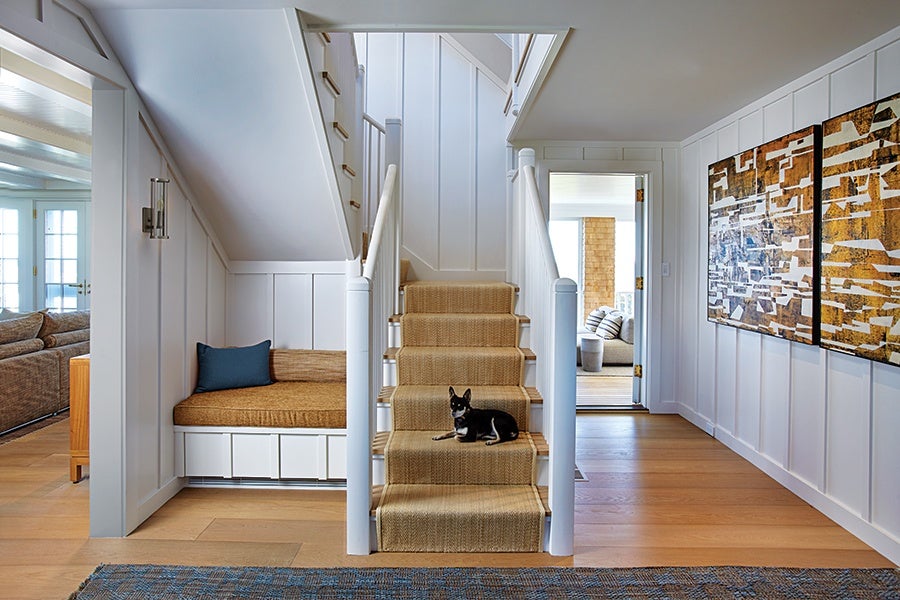
Photo by Charles Mayer
Don’t Scramble, Streamline
Neubauer approached the layout with a light hand, simplifying the plan so the house is easier to live in. As was typical of turn-of-the-century summer cottages, there was a slew of bedrooms—four in the main body and three railroaded in the west wing. Neubauer reduced the number to four, gracing each with an en suite bath. Downstairs, the kitchen, capped by a new mudroom on one end and stairs, fills the west wing, with natural light streaming in along both sides. Most significantly, Neubauer opened up the oceanside screened porch that was suffocated by jalousie glass years before. French doors lead there from the dining room, while French doors in the living room lead to the adjacent terrace. “There is more breathing room and connection to the landscape,” the architect says. “You feel the breeze, catch the sunlight, and hear the waves.”
Architect Neubauer Ennis Architects
Builder E.B. Norris & Son
Interior Designer Clodagh Design
Landscape Architect Bernice Wahler Landscapes
First published in the print edition of Boston Home’s Summer 2026 issue, with the headline “Humble Glory.”